Wednesday, August 11, 2010

Victory!

So. Finally. The mythical website is – drum roll, please – ready! From the Living Room is already over there waiting for you, although it probably won’t be updated as often as it used to be.

The idea behind this new web space of mine is that I can keep everything in one place, and hopefully present a more professional front when I’m submitting writing elsewhere. There is a space for poetry and one for fiction, although there isn’t a lot of content on either yet. I need to do some editing...

There will also be a new blog, which I hope you will all come and visit from time to time. I think one of the reasons that From the Living Room has been slipping recently is that it is too far away from the other writing work I’m doing, and it has been hard for me to keep up with both. The new blog, Four Wise Monkeys, has a slightly more specific theme and should hopefully allow me to explore my writing at the same time as producing regular web content.

Now that I’m not spending all my online time adjusting columns, I should be back to my regular blog-reading again too. I’m sorry to have been so elusive of late!

So here it is: my new online home. Here’s the front door: www.jadamthwaite.co.uk, and if you’d like to update any direct links you may have to the living room, here’s the address for that too: http://www.jadamthwaite.co.uk/from-the-living-room/.

Be warned: it’s a bit bright compared to here!

Image by Mike Gifford

Sunday, July 25, 2010

Um... hi! *Waves*

The new site is taking a bit more work than I imagined and I seem to be neglecting all things blogging while I deal with it. Thank you for being patient... I'll be back soonish!

Saturday, July 17, 2010

Living Room News

I’ve been moaning about the blogging situation for a while. I don’t know if it’s Twitter or the amount of work I need to get done offline or just simply a declining interest, but From the Living Room is becoming difficult to maintain; it’s beginning to feel like a chore. That said, I still love blogging: the writing for people who read what you’ve written; the meeting other bloggers; the drive to write constantly, even when writing isn’t going well.

I’m in the middle of setting up a new site. It’s going to take a little while longer to get up and running, but it’s well under way. I’m going to take From the Living Room over there with me, but I’ll update it more sporadically than I do now. I will also be setting up a new blog, which will have more of a theme and will hopefully help my fiction writing as much as providing my regular blog content. I’ll have pages for my poetry and fiction over there too, which will hopefully encourage me to take a broader approach to writing online. You’ll even get an honest profile picture instead of my usual feather!

I hope that you’ll all come over and visit me when I move my living room. I’ll let you know the address as soon as it’s ready. In the meantime, please bear with my inability to keep up with other blogs. I hope to be back soon!

Image by Maksim

Sunday, July 4, 2010

Lilac Wine

I'm feeling very uninspired on the blog front at the moment. I don't know why exactly but I know there are a few of you in the same position. I'm planning on moving my web content later this year and making it a little less blog-centred. It's a bit of a chicken and egg situation but it definitely has something to do with my current drought.

While I try to think of something interesting to write, I'll leave you with this beautiful video of The Cinematic Orchestra's cover of Lilac Wine by Jeff Buckley. Because at least feeling uninspired gives me a good excuse to post videos!

Thursday, June 24, 2010

I Blame the Armbands

On a Thursday afternoon I have the dubious pleasure of sitting on the edge of a swimming pool shouting encouraging comments at ten year olds as they learn how to swim.

Their swimming teacher is very good, and every time I watch them, I think how much difference your swimming teacher can make to your relationship with water and swimming.

I’m a fairly poor swimmer. I can do a nervous breaststroke that involves keeping my head out of the water (much like a paddling dog) and wincing anytime someone splashes me, but that’s about my limit. And I’m terrified of jumping in.

I love the concept of swimming; I love how freeing it looks to be able to swim well. In fact, dreaming of it is one of my preferred ways to relax at bedtime. In reality though, I’m very nervous of large expanses of water and my swimming skills leave a lot to be desired.

I was taught to swim with armbands by a lady who walked along the edge of the pool with a long metal rod and occasionally shouted at me about how I needed to kick more. I loathed swimming lessons. The pool was sunk in the middle of a concrete building lined with changing cubicles and there was always a faint smell of urine. We were supposed to change much quicker than I was capable of and the teacher would get cross if we took too long to blow up our armbands. I can still remember the sound the reverse alarm on the school minibus made: the sound that filled me with dread every time I had to go swimming.

The children I take to the pool on a Thursday are taught to get their heads wet and jump in before they even start learning to swim. And there isn’t an armband in sight. Floats, yes. Armbands – those bright, uncomfortable inflatables that make it impossible for you to keep your head under even if you want to – no. They’re taught variety: front crawl, backstroke, breaststroke, picking things up from beneath the water... Actually, I think that happened when I was taught too, but you only got to do most of it once you’d mastered breaststroke... which I didn’t.

Every time I watch the children’s lessons, I think about how much I would like to be able to swim properly. It looks relaxing, freeing – comfortable even – to be able to do it confidently.

So I’ve been thinking I might to try to get myself some adult swimming lessons one of these days... though preferably not at the local pool, where I’m bound to run into lots of children I know, all of whom are vastly superior swimmers to me.

Photo by Chip Smith

Sunday, June 20, 2010

An Extra Dimension

My favourite kind of art is interactive art: art that places you in the centre of it and forces you to think about your own place in the world.

Yesterday I went to see Anthony Gormely’s exhibition, Test Sites, at the White Cube, and it did exactly that. There are two parts to it but the part that spoke to me the loudest was Breathing Room III, an imposing framework of photo-luminescent “space-frames” that you are invited to walk through.

You are directed into Breathing Room III by an usher with a flashlight, who shows you the path into a dark room. You round a corner and are immediately faced with a glowing web, a structure that appears more like a complex series of light-beams than anything solid. It’s a bit like being in a computer game. Or possibly The Matrix. You can walk through the structure, picking your way through the grids of light, and when you stand there in the middle of all that, it feels a bit like you might have just discovered another dimension.

And then, suddenly, the room is filled with bright light. You’re looking at a plain white structure and a room full of shocked and blinking faces. Suddenly the whole thing seems to have lost a dimension; everything feels flat and empty. Everything feels a bit wrong.

Then, without warning, the lights go off again, and that first moment when you are confronted with the glowing grids is just magical. It’s like regaining a dimension. It feels safe again and beautiful. I could have stayed there for hours just for that moment. I’m a light-beam junkie.

It’s only at the White Cube until 10 July, but if you’re in London with a spare half an hour, I highly recommend it. And if you're not able to experience it first-hand, the Guardian have some great photos of it here.

Image by David Levene for the Guardian

Monday, June 14, 2010

On Rainbows (and Other Colourful Things)

The other day it occurred to me that reading a writer’s description of a colour might be the closest we can get to all experiencing it in the same way.

And then it occurred to me that I was wrong: a writer’s description is just as subjective as anyone else’s perception.

It fascinates me that we can all look at the same pasture at the same time and agree that we’re seeing a green field. Maybe we’ll even agree that it’s a dull green or a yellowish green. But we’ll never have any way of knowing if we’re seeing it in exactly the same way, if that particular shade of green looks the same to all of us. This idea makes me feel both excited and lonely. I really like the idea that we could all be having subtly different experiences of the same colour, that our points of view could be so unique. Yet it feels very isolating to think that we might be the only person experiencing something in a particular way.

This is something that bothers me every now and then. On this particular occasion, I was briefly very excited that we might all be united by reading the same description of the colour of oranges in a fruit bowl or the same passage about the light shimmering in someone’s chestnut hair. Then I remembered the subjectivity of the writer’s own perception, and the influence of the way we normally see things on our interpretation of the description.

There really is no way of knowing whether we’re all seeing the same thing when talk about the colour blue. I find this unsettling.

Image by Gavin Bobo

Sunday, June 6, 2010

Drought

I know I’m not the only one who’s suffering from the current blogging drought. Why is it that it seems to get a few of us at the same time? Is there some seasonal factor that makes us more or less committed to maintaining our blogs?

To be honest, I haven’t really settled back into any of my working patterns since I returned from my Easter retreat. But, back from a week away visiting friends in Berlin, I’m aiming to knuckle down this week and try to get back a bit of my motivation. No one is more irritated by my current inactivity than I am.

One of the biggest problems has been my work space. Since I’ve been back from my solitary writing trip, I’ve had to readjust to having my desk in the living room. Before I left I was used to sharing my space with Dave. Now I’m having to relearn how to cope with the constant distraction. It’s been a bit like moving in all over again!

It’s hard for Dave too, of course. He made an album recently which he had to record in hour-long slots between each of us getting home from work. It’s impressive that he managed to complete it at all, let alone that he made something good. You can listen to Going Back to Finish the Job free on Soundcloud if you’re interested, or you can buy it from his myspace. Not that I’m advertising of course...

We’re moving house again in a few months time and will gain more private work areas in the process. While I never look forward to moving, I will wholly welcome the end to this particular problem.

In the meantime, I’m going to have to force myself to focus and remember how good it feels to be productive. You never know, maybe I’ll even be able to show you some evidence one of these days!

The Dave - 07 - Audio - The Flaw by The Dave

Image by Bidgee

Sunday, May 30, 2010

Not a Party Person

I went to a party not long ago where the host’s housemate cocooned herself in her room for the evening to avoid the party that had flooded the downstairs part of her house. I respected her ability to unashamedly declare that parties just aren’t her cup of tea and remain absent from an event that was happening in her own house.

I’m not a party person either. I’ve accepted it but I’m not quite brave enough to embrace it like my friend’s housemate. I always feel the pressure to go to parties, particularly when they’re hosted by friends who I’m eager to see in other situations. I’ve never been bold enough to come out and say, “Well to be honest, I just don’t enjoy parties.”

It’s not that I’m not sociable: I’m very sociable with people I know. But I find getting to know new people difficult, and (unless it’s one I’m unusually comfortable with), a party is generally full of new people. I’m not good with small talk and I can never quite understand how to move a conversation from small talk to something more substantial. Frankly, the whole process is rather more difficult and awkward than I can bear to cope with most of time; I’d far rather meet a small group of friends and be introduced to others one at a time in a situation where everyone is completely at ease.

I love those rare occasions where you get past the awkward barrier and realise that you’ve made a genuine friend, but I don’t find parties, on the whole, to provide me with this opportunity. Having the same conversation twelve different times with people I know I’ll never see again just isn’t something I find fun. I tend to end up planted firmly beside the dips, nervously sampling every kind of crisp available and drinking slightly too much wine slightly too quickly.

It’s only recently that I’ve realised that this is a permanent attitude for me. It feels quite relieving to know that it’s just that I don’t much enjoy parties and not that I’m intrinsically antisocial. Although I should probably have worked this out earlier...

Image by
D Sharon Pruitt

Sunday, May 16, 2010

Listing

We all have quirks about us, little idiosyncrasies that make us who we are. I always thought I was aware of mine, but I recently discovered something peculiar about myself that I’ve never noticed before: I make lists in the back of my head. I don’t know how long I’ve been doing it, but I’ve caught myself on several occasions since I first noticed.

They’re not relevant lists. They have no bearing on anything that’s going on in my life. They’re just fillers, little chants that happen behind my more useful thought processes. I seem to list food the most, but sometimes I catch myself listing animals or numbers, often in a loop, repeated as though it’s a shopping list I’m trying to remember: bacon, cheese, carrots, fish... But I’m not going shopping. I don’t need to remember these things. These things have nothing to do with anything that’s happening in my day.

It was the looping that first made me notice it. I tuned into my thoughts when I was walking to work one day and they seemed to be urging me to notice them, exactly like a to-do-list that’s bugging you as you try to keep it running in the back of your mind so that you won’t forget what you have to do when you get home.

I’ve “heard” it quite a few times since then. It’s like I’m overhearing a little part of my brain carefully giving itself lists of things to keep itself focussed. I have no idea why I do this, or whether it’s something that everyone does but it seems very bizarre. What am I trying to do? Is it a way of keeping myself grounded? Perhaps I find it comforting, caught in the routine of doing something familiar.

I can’t claim I’ve looked into it in any great depth, but Google doesn’t seem to be able to help me. I’m not especially bothered by it. It doesn’t seem to be doing me any harm. But I am interested in it. I do want to know why my brain has decided that this is a good use of energy... because it seems fairly pointless to me.

Any ideas?

Image: La Pensierosa by Roberto Terracini (Photograph by Davide Terracini)

Sunday, May 9, 2010

Closing the Window

It’s possible (but unlikely) that you’ll have noticed that I don’t display links to my poetry blog anymore.

I would like, in the not-too-distant future, to set up a website with separate pages for poetry, fiction and blogging, but for the time being, I don’t feel that the site is good enough to maintain. So Window (which is what Dave and I were calling ourselves in relation to poetry), has disappeared. Or at least, I’m in the process of trying to make it disappear, which turns out to be quite difficult given that the internet sets your footprints in cement and makes it impossible to completely remove anything. That and I still haven’t had my laptop repaired, so my internet time’s limited.

There is a lot of editing that I feel needs to happen before many of my poems are ready to display and I think having a blogger account specifically for them was encouraging me to alternate between posting them before they were really ready and not posting them at all.

Perhaps I will display poetry here from time to time until I get round to creating a new site. I like the idea of having everything in one place. Keeping up with it all seems like a much less daunting prospect if it comes under the same username and password. But for now, I’m afraid any Window links you might have had won’t work… sorry!

Image by Mutari

Sunday, April 25, 2010

The Artificial Passenger

I’m afraid you’ll have to bear with me a while longer. Things are hectic round here at the moment and without my laptop, I’m pretty useless. How on earth did writers cope before computers? They must have had a whole lot more discipline and patience than I do, I think.

I’ve been reading Counting Sheep by Paul Martin recently (well worth reading if you’re interested in sleep and dreaming, and easy to read too). There’s a section that particularly caught my interest about something called the ‘Artificial Passenger’, developed by IBM to reduce accidents caused by sleepiness. Has anyone come across this? It’s designed to go in cars, programmed with personal information about the driver. The idea is that it can hold a conversation with you, even tell you jokes, to keep you stimulated while you’re driving. It judges your responses on intonation and speed and if it concludes that you’re falling asleep, it opens a window, sounds an alarm or sprays water at you to keep you awake. Which I imagine could be quite dangerous in itself, but one assumes this has all been safety tested.

Apart from the fact that this seems like an insane idea, I can’t imagine how it can possibly work. Even if it knows all your favourite conversational subjects, how can it know enough about them to provide enough engaging conversational material to keep your mind busy? I imagine the conversation would be a little one-sided.

While I’m all for looking for ways to reduce road accidents, this idea seems a bit crazy to me. The idea of any kind of artificial company worries me. What’s wrong with a good night’s sleep and/or a real passenger? One who actually knows you and has a natural ability to converse.

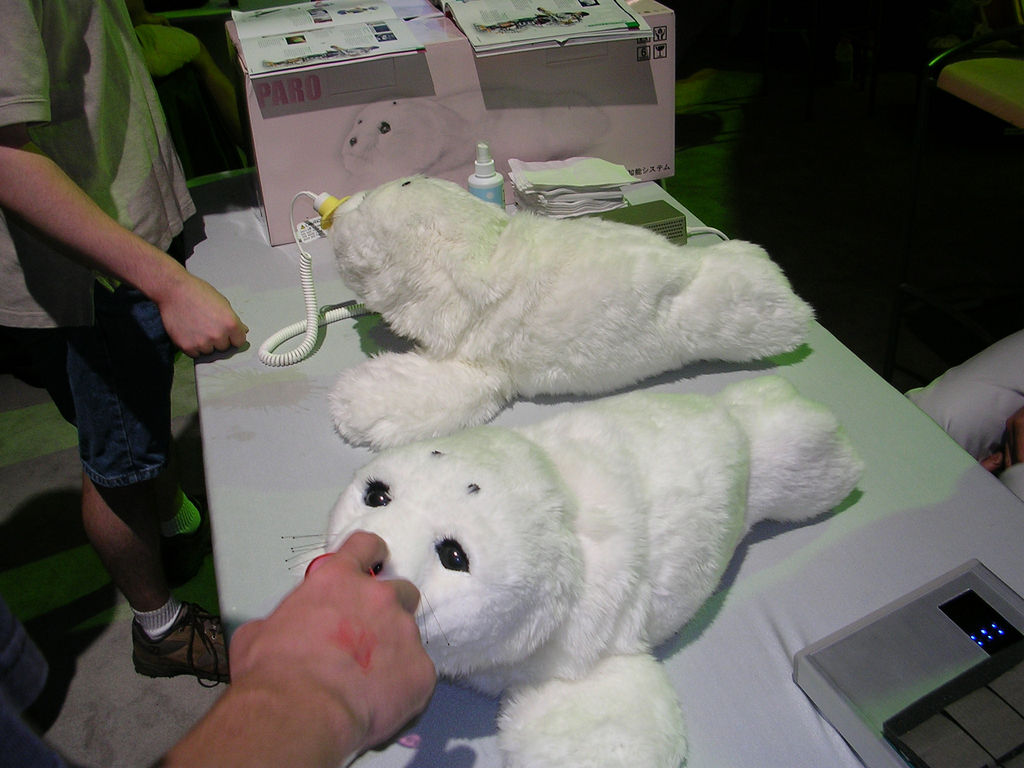
The idea reminds me a little bit of Paro the Seal, a robotic baby seal that responds to human voice and touch, invented in Japan for use in nursing homes and hospitals. It was designed as a therapy tool, and is apparently very effective in reducing stress and promoting social interaction between patients. But I find the idea a bit creepy. Yes it’s very cute, but there’s something disturbing about watching cared-for adults talking to an inanimate object. It just feels very patronising.

I leave you with Paro. And I have to say, I can see the attraction. Which is, perhaps, what frightens me.


Image by Aaron Biggs

Sunday, April 18, 2010

The End

Having looked forward to my writing retreat for the best part of a year, it seems strange now that it’s over. It was such an amazing opportunity and I would jump at the chance to do it again.

The first couple of days were a bit overwhelming. Here I was in voluntary isolation with grand plans to write the whole first draft of a full-length novel. I was in a beautiful place with no one to share it with, and I wasn’t going to have any phone reception for two weeks. Oh dear, I thought. Why have you done this to yourself?

And then, after a couple of long days of arduous writing and feeling sorry for myself, the sun came out and I went for a spectacular walk along the cliff side. I’d made a good dent in the first section of my novel by this stage, and it didn’t seem quite so hopeless. I stopped thinking of my trip as some kind of lonely holiday and started enjoying it in the spirit I'd intended: as a taste of a different way of life. And once I got that sorted, I was fine.

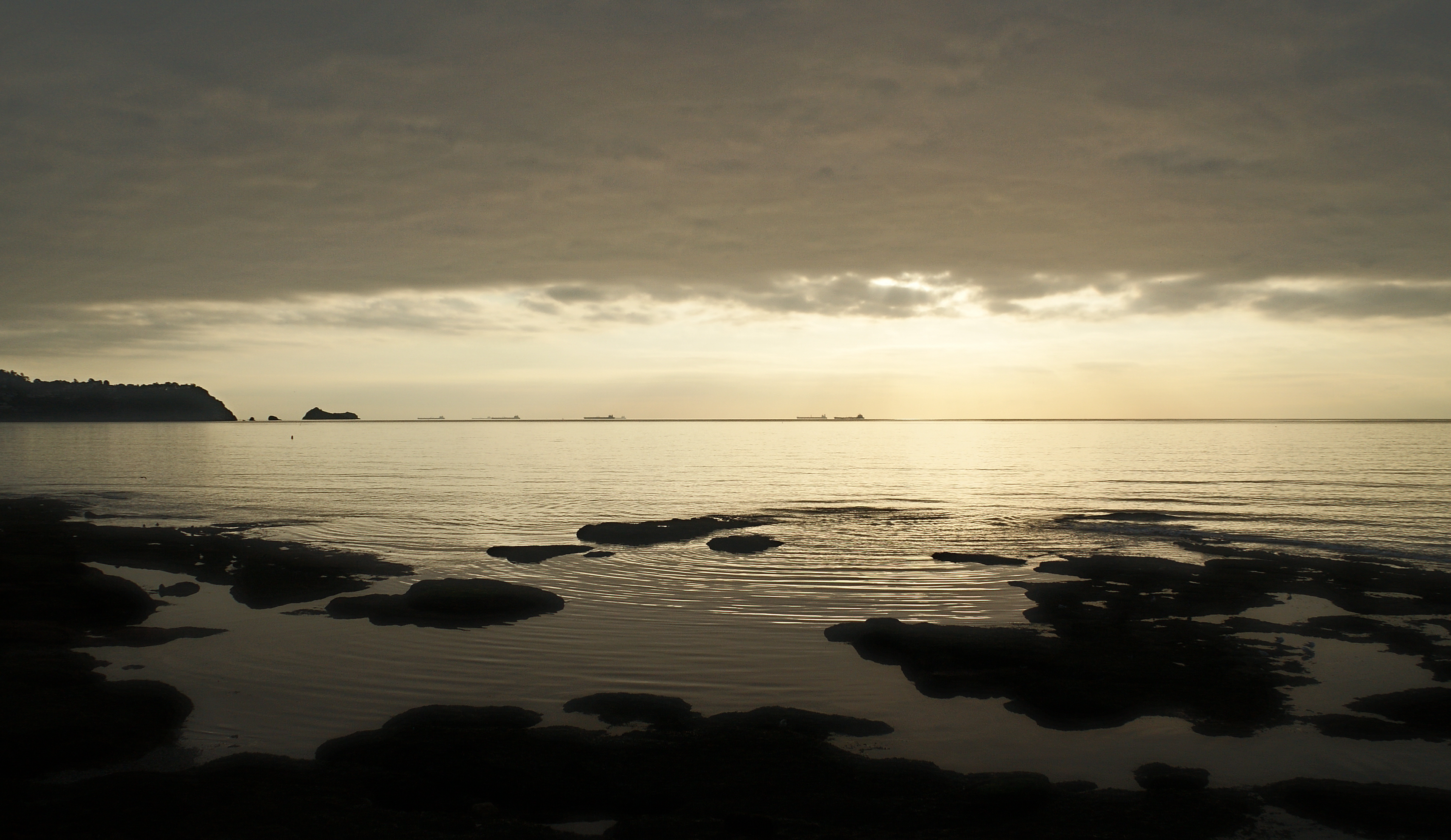
I spent my days writing and walking along the coast. I absolutely fell in love with the place. It was achingly beautiful, and I loved falling asleep to the sound of the waves and waking up to the squabbling seagulls. I would eat breakfast in the garden, watching the waves lap against the wall, and in the evening I would walk to the top of the hill to watch the sun set over the sea. Everything became beautifully timeless, and the structure of my days began to be guided by daylight and tides instead of the hands on my watch. If I could live like that forever, I would be very happy.

I hit my writing target, not quite in word count, but certainly in terms of content. I have come back with a first draft, and (as you might expect from a first draft) it’s hideously rough and has an awfully long way to go before it will be readable. But it’s there. It’s written. And around my ordinary life, that would have been impossible in two weeks.

Now I’m back in the real world where I have to think about other things than my characters and go back to work in the mornings. Which is a hard adjustment after two weeks that, simultaneously somehow, seemed both to fly by and last forever, as though I’d never lived any other kind of life.

Since I’ve been back, my computer seems to have collapsed with exhaustion and is currently refusing to turn on. So my plans of catching up online have been thwarted and I may be lying low for a little while longer yet.

Tuesday, April 6, 2010

Adjusting

I thought you might like to see where I’m hiding.


I’m three days into my adventure, and I’ve been finding it quite hard to adjust to being so isolated. I’ve been writing to my targets, but I haven’t found it particularly fulfilling. Not, that is, until today.


Today I unearthed a little of my writing mojo and remembered what it is that writing means to me, what I believe writing should be. Hopefully that’s back to stay for the rest of my time here, and now I can really crack on with the task in hand.


I’ve been learning some things about myself while I’ve been alone out here, and realising the things that I take for granted at home. I don’t think I really realised how hard this would be; it’s taken rather more adjusting than I’d considered. But I’m hoping the adjustments have been made, and that I’m strong enough to just get on with it all now.


I have a lot of work still to do, and while I’ve been meeting my targets, I don’t really feel like I’ve started working to my full potential yet. But there’s still time.


This, after all, is only the beginning of my journey.

Monday, March 29, 2010

Countdown

There are four more days left before I set off on my adventure. I’m filling my pencil case and searching for holes in my planning. I’m writing lists of things I need to take and things I need to do before I go. I’m having long staring contests with my suitcase, trying to figure out exactly how much stuff I can take with me. And I’m panicking just a little about whether my goals are achievable and whether I’m putting too much pressure on myself.

I’ve had this trip booked for about eight months so it seems odd to think that now it’s actually about to happen. Suddenly I’m realising just how brave I’m forcing myself to be, determined as I am to really live in this project for a couple of weeks. Suddenly I’m realising that the time has come to really test all this work I’ve been doing... and I have to admit, a tiny part of me is sad that soon it will all be over.

I won’t be posting here much while I’m away (although I might post a few photographs if I’m feeling gloaty!) and I will be having a couple of weeks off The Character Project. I think it’s going to take rather more self-control than I have to stay offline completely, so I’ll be about here and there... but expect me to be quiet for a few weeks.

This week, I will mostly be panicking and trying to finish off my preparations. Then on Saturday, I will set off for my quiet cave by the sea.

Fingers crossed for me not having lost my marbles by the next time I post!

Image by Joe Mabel

Monday, March 22, 2010

A Concert before Lunch

You’ll have noticed the lack of posts round here lately (especially of the non-writing-related variety). This largely correlates with the lack of life I’ve been having as I suddenly find out where my self-discipline’s been hiding and start making up for lost time. My house is a mess too, but we won’t go into that.

I haven’t really being doing anything apart from going to work and spending long evenings at my desk. This is a good thing. But it’s making me antisocial, uncultured, and slightly peculiar... and as such, things to write blogs about are proving few and far between.

So it’s a good job I work in a primary school and occasionally get to go on educational trips.

Today’s was with a year five class to see the London Symphony Orchestra play. This isn’t the first time I’ve realised how lucky we are to live in London or how lucky our children are to get these opportunities.

The concert was aimed at Key Stage Two children and was really well structured to keep them engaged and teach them (and me, who’s generally ignorant of all things music) about the workings of an orchestra.

My overwhelming feeling about it was, as it is at pretty much every music event I attend, one of total admiration.

I can never quite get over how all those individual instruments, by playing all at once, can create such an immense sound. The LSO played excerpts of various well-known pieces for the children, and this really highlighted for me just how amazing it is that this music can be produced.

Watching the musicians work together to produce these magnificent pieces made me admire their discipline, skill and – perhaps more than anything – lack of ego. In order to play in an orchestra, in order to play these amazing pieces of music, the musicians have to give themselves over to the group. No one’s going to say, “Oh, I really thought the fifth violin sounded beautiful tonight.” In an orchestra, a musician is like an ant: only useful as part of the colony. I couldn’t do that (even if I could play an instrument). My ego’s quiet... but it’s there.

My other thought, mixed up with the admiration and the gratitude, was how lovely it must be if your job is to play in a major orchestra. Like anyone who gets to pursue their chosen art form for a living, these people are doing what many people will only ever dream of.

And for me, it was a great way to spend the working day!

Image by Ian Britton

Monday, March 15, 2010

Edit and Destroy!

I recently discovered an editing flaw that I didn’t realise I have.

When I’m editing something, I tend to read it out loud repeatedly, trying to catch the lumps and bumps that I don’t see when I’m reading through in my head. Sometimes I’ll have to stop for a while because the lump is actually more of mountain and needs some serious flattening out.

And then I’ll have to go back to the beginning again because I’ve lost my flow.

The result? A seriously over-edited first couple of paragraphs.

Somewhere in the middle of the process, the extra time I spend on the beginning of a piece of writing pays off: the chinks are ironed out and all the words are working nicely together... and then I take it too far.

I stretch the metaphors and polish the imagery so much that it becomes blinding and you can’t see what I was referring to in the first place. It’s a bit like when you’re cooking and you enjoy adding the spices so much that you keep on adding them – just a bit more of this and a tiny extra sprinkle of that - and then what you end up with is inedible.

I can’t see the extent of the damage while I’m doing all this because every time I read it I’m still thinking of the meaning I know was there when I started. It takes a bit of distance – at least a few days, if not longer – before I realise what I’ve done.

An example: the first line of Biscuit, which was the piece I wrote for The Character Project a couple of weeks ago: “A fruit fly scuttled round the ochre-green flowers, rubbing its feet through ceramic pollen.”

Any idea what that’s about?

No, neither did I when I read it back the other day.

I’ve removed all reference to the bathroom tiles I was talking about. I’ve totally undermined the impact of the ochre with the mind-boggling image of ceramic pollen. And I’ve succeeded in making the fruit fly sound seriously disoriented, which is perhaps something of a feat in itself.

This is clearly something I’m going to have to watch out for.

Image by
Corey Anderson

Monday, March 8, 2010

A Story


Today's post is a cheat, I'm afraid. I wasn't going to cross-post any of my stories for The Character Project, but I've had computer problems this weekend and my to-do list is endless. So I've pulled out a story from a few weeks back. With a bit of luck, you didn't read it at the time!


Catching Breath

That guy. The one over there in the red shirt. He’s been in here every day this week.”

Graham sighs. He should have known they’d get suspicious after a while. Not that it matters.

He watches his shadow creep across the swings as they fly backwards, forwards, backwards, forwards. The two women are leaning against the flaked blue posts, occasionally pushing their daughters or waving to them as they whiz past in fits of giggles. They aren’t bothering to lower their voices. Perhaps they think he can’t hear them. Perhaps they want him to hear.

“Maybe he’s got kids,” the one with the yellow scarf says doubtfully, scanning the park for parentless children.

“He hasn’t.” The other one says.

They are hemmed in the neat hexagon of the park by a blue metal fence. He watches a heap of small bodies cling to the roundabout as an older brother races round in circles. A little boy chuckles gleefully as the seesaw thumps his feet to the ground and his sister bounces into the air. On a nearby bench, a young woman passes crusts of bread to her son, who throws them nervously at a scrum of pigeons and then retreats to the safe space between her legs.

Graham smiles. He could sit here for hours.

“Maybe we should call the police,” the woman in the pink coat is saying. “You just don’t know what he’s going to do, do you?”

He watches a group of older boys chase between the springy animals, immersed in some kind of game where the blue bits are safe. Their agile limbs tear through the air with boundless energy, their voices colouring the air in bursts.

“How long’s he been here anyway?” She’s lifting her daughter from the swing, zipping her safely into a fleece jacket.

The woman with the yellow scarf shrugs and steals a furtive glance is his direction. One of the boys runs up to her, wipes a glistening slug of snot along his sleeve, and bundles a duffle coat into her arms. He leans forwards on his knees while he catches his breath and then chases after the others, shrieking.

“Never have boys,” the woman tells her friend, shaking her head through the traces of a smile.

The woman in the pink coat laughs. “Well, be careful, alright? Don’t let Niall stay on and play here if you’re leaving, will you?”

The woman who knows football boots and grass-stained knees throws her scarf over her shoulder and looks behind her at Graham huddled in the same red shirt he’s been wearing these past three days.

“I’m not leaving him,” she says firmly.

The pink-coated woman nods and fires a long, bruising stare at Graham. “Well, we’re off then. Take care, alright?”

Graham doesn’t look at them. He watches an older girl swing between the monkey bars, her delicate body fluttering from post to post like a feather.

He focuses, as he always does, on their small limbs and laughing faces.

He tries not to think about the shrieking whiteness of the room in the hospital over the road or the small fragile girl laid out inside it. He tries not to remember the way a lorry looks when its nose is crunched into your passenger doors or the silence of a child caught beneath its bumper. He doesn’t think about his latest conversation with the doctor, the dark stains beneath his wife’s watery blue eyes. He doesn’t think about the tubes and the machines and his daughter’s breathless lungs.

He twirls an empty water bottle between his fingers, remembering how much Katie likes this park, wishing he could catch his breath for her and pour it from the plastic bottle straight into her lungs.

Monday, March 1, 2010

Thaw

Fiona Robyn has recently published her new novel, Thaw and has decided to blog it daily over the next few months so that you can read the whole thing for free. I haven't read it myself yet (I'll be reading it in blog form too) but I've read bits and pieces of Fiona's writing and have no worries about recommending it to you. She regularly posts tiny little gems at A Small Stone so I'm quite confident that Thaw will be a good read.

Thaw is told through thirty-two-year-old Ruth's diary as she takes three months to decide whether to end her life. Ruth's first entry can be read below. And if you like it, you can continue reading Thaw tomorrow here.

*

These hands are ninety-three years old. They belong to Charlotte Marie Bradley Miller. She was so frail that her grand-daughter had to carry her onto the set to take this photo. It’s a close-up. Her emaciated arms emerge from the top corners of the photo and the background is black, maybe velvet, as if we’re being protected from seeing the strings. One wrist rests on the other, and her fingers hang loose, close together, a pair of folded wings. And you can see her insides.

The bones of her knuckles bulge out of the skin, which sags like plastic that has melted in the sun and is dripping off her, wrinkling and folding. Her veins look as though they’re stuck to the outside of her hands. They’re a colour that’s difficult to describe: blue, but also silver, green; her blood runs through them, close to the surface. The book says she died shortly after they took this picture. Did she even get to see it? Maybe it was the last beautiful thing she left in the world.

I’m trying to decide whether or not I want to carry on living. I’m giving myself three months of this journal to decide. You might think that sounds melodramatic, but I don’t think I’m alone in wondering whether it’s all worth it. I’ve seen the look in people’s eyes. Stiff suits travelling to work, morning after morning, on the cramped and humid tube. Tarted-up girls and gangs of boys reeking of aftershave, reeling on the pavements on a Friday night, trying to mop up the dreariness of their week with one desperate, fake-happy night. I’ve heard the weary grief in my dad’s voice.

So where do I start with all this? What do you want to know about me? I’m Ruth White, thirty-two years old, going on a hundred. I live alone with no boyfriend and no cat in a tiny flat in central London. In fact, I had a non-relationship with a man at work, Dan, for seven years. I’m sitting in my bedroom-cum-living room right now, looking up every so often at the thin rain slanting across a flat grey sky. I work in a city hospital lab as a microbiologist. My dad is an accountant and lives with his sensible second wife Julie, in a sensible second home. Mother finished dying when I was fourteen, three years after her first diagnosis. What else? What else is there?

Charlotte Marie Bradley Miller. I looked at her hands for twelve minutes. It was odd describing what I was seeing in words. Usually the picture just sits inside my head and I swish it around like tasting wine. I have huge books all over my flat; books you have to take in both hands to lift. I’ve had the photo habit for years. Mother bought me my first book, black and white landscapes by Ansel Adams. When she got really ill, I used to take it to bed with me and look at it for hours, concentrating on the huge trees, the still water, the never-ending skies. I suppose it helped me think about something other than what was happening. I learned to focus on one photo at a time rather than flicking from scene to scene in search of something to hold me. If I concentrate, then everything stands still. Although I use them to escape the world, I also think they bring me closer to it. I’ve still got that book. When I take it out, I handle the pages as though they might flake into dust.

Mother used to write a journal. When I was small, I sat by her bed in the early mornings on a hard chair and looked at her face as her pen spat out sentences in short bursts. I imagined what she might have been writing about; princesses dressed in star-patterned silk, talking horses, adventures with pirates. More likely she was writing about what she was going to cook for dinner and how irritating Dad’s snoring was.

I’ve always wanted to write my own journal, and this is my chance. Maybe my last chance. The idea is that every night for three months, I’ll take one of these heavy sheets of pure white paper, rough under my fingertips, and fill it up on both sides. If my suicide note is nearly a hundred pages long, then no-one can accuse me of not thinking it through. No-one can say; ‘It makes no sense; she was a polite, cheerful girl, had everything to live for’, before adding that I did keep myself to myself. It’ll all be here. I’m using a silver fountain pen with purple ink. A bit flamboyant for me, I know. I need these idiosyncratic rituals; they hold things in place. Like the way I make tea, squeezing the tea-bag three times, the exact amount of milk, seven stirs. My writing is small and neat; I’m striping the paper. I’m near the bottom of the page now. Only ninety-one more days to go before I’m allowed to make my decision. That’s it for today. It’s begun.

Continue reading tomorrow here...

Saturday, February 27, 2010

Lucy

I heard a fascinating story today. You should really listen to it on the latest episode of Radiolab, but in case you don’t get a chance, I’ll tell it to you.

Lucy was a chimpanzee adopted by Maurice and Jane Temerlin when she was just two days old. The psychologist and his wife wanted to see how her behaviour would be affected by being raised by human parents. Lucy was taught sign language and ate her meals at the table with her adoptive parents. She wore human clothes, coloured in colouring books and made hot tea for visitors. She seemed to be able to read human emotion and would comfort her ‘parents’ when they were sad. She was, to all intents and purposes, the Temerlins’ daughter. Until she was twelve years old.

As Lucy matured, she became difficult to manage. She became increasingly destructive and the Temerlins had to build her a cage to protect their home from her. Eventually, they came to the conclusion that they could no longer keep her and took her to a nature reserve in Senegal.

Lucy found it incredibly difficult to adjust to life away from the comfortable American home she had grown up in. She wasn’t human but she wasn’t really a chimp either. She was caught between the species, fitting easily into neither camp. In this new environment, Lucy stopped eating, developed skin disorders and lost a lot of her hair.

Lucy from Radiolab on Vimeo.


Her primary caretaker at this time was Janis Carter, who had known Lucy towards the end of her time with the Temerlins. Carter, who had only intended to stay at the reserve with Lucy for a few weeks while she settled in, quickly realised that Lucy could not survive in this environment and took her and the reserve’s other human-reared chimps to an abandoned island in the Gambia River. She had intended to allow them to roam the island freely but the chimps weren’t yet able to live like wild chimps. They refused to leave Carter’s side.

Carter gradually weaned the chimps off their attachment to her, shutting herself away from them in a purpose-built cage. Eventually the majority of chimps started to explore the island without her. But Lucy would not leave. She stayed beside Carter, signing that she felt hurt.

It took several more years before Carter was able to persuade her to leave her side but eventually Lucy learned to find her own food and joined the other chimps on the island.

Janis Carter was finally able to leave and only once she was confident that Lucy had settled did she allow herself to visit the chimps.

The first time she did this there was an emotional reunion but Carter was relived to find that Lucy was able to walk away from her with the other chimps. The second time, Lucy was nowhere to be found.

Carter eventually found Lucy’s skeleton in the place where the cage had once been.

It is thought that her unnatural trust in humans lead her into the hands of poachers.

Lucy’s upbringing meant that she was unable to survive efficiently in the wild. Although she was eventually able to fend for herself, she remained thin for the rest of her life. Her death, not confirmed but strongly suspected to be at the hands of a human, seems symbolic of her story.

I don’t think Maurice and Jane Temerlin ever intended any harm to come to Lucy but they utterly destroyed her natural life as a chimp. Although they doubtlessly loved her as though she really was their own daughter, their actions serve to illustrate the destruction humans can cause when we take nature into our own hands.

Thankfully, contemporary studies on chimpanzees keep the animals in more natural environments and do not separate them from their mothers. Lucy taught us that although chimps have a lot in common with us, they are not, cannot be, and should not be treated as though they are the same.

The guys at Radiolab tell this story much better than I do. You should really listen to them tell it if you have a spare hour. I promise it will be an hour well spent.

Image by Aaron Logan (Note: this is not Lucy)

Saturday, February 20, 2010

Spider-Sense

I think I might have a super power…

The other day I was in a supermarket with my friend while he chose a packet of teabags to keep in his office. The beautiful smells of all the different teas mingling in the air hit me as soon as we turned into the aisle. When I mentioned it, I was surprised to find that my friend couldn’t smell it. It seemed so strong to me that I found it hard to imagine how he couldn’t.

This was the first time I truly realised just how sensitive my sense of smell is.

I take great pleasure in smell. I love the relationship it has to memory and I love the richness it adds to life. If I come across a smell I like, I breathe deeply; drink in as much of it as I can. I like the smell of new books – some more than others – and I’m prone to sticking my nose between the pages and breathing in all they have to offer. I love the smell of clean washing and fresh baking; of coffee before the water’s been added and the ground just after it’s rained. These smells are loved by all sorts of people so it never really occurred to me that I might be more sensitive to them than others.

We’ve had some problems with condensation and damp recently and I’ve been quite unsettled by the associated smells. It’s become a running joke in our house because Dave can’t smell them and I, in contrast, have spent quite a lot of time ranting with my nose pressed to the curtains. I thought it was probably either me being affected psychologically because the concept of damp was upsetting to me, or him just being very unobservant. Dave, of course, has already proposed the idea that I might be unusually sensitive to smells, but I never believe him about anything until I reach the same conclusion on my own!

My friend, who’s more scientific than I am, told me that all our senses are dampened by our bodies, which put up barriers to stop us from receiving the full extent of the sensory experiences available to us. It would be too much, he says, for us to smell all there is to smell and it wouldn’t be of much practical use to us in the modern world anyway. Some people just are more sensitive than others.

And maybe I’m one of them.

When it comes to things like damp, I’d rather this wasn’t the case… but in general, it feels like a great super power to have. The pleasure I get from positive smells is so great that I will happily take the negative alongside.

Image by Elucidate

Tuesday, February 16, 2010

Nemesis

When I was at school, one of my (many) least favourite things to do was write personal statements. I don’t know why I had to do it so often but I seem to remember it being a yearly ordeal and it was always a struggle for me.

I didn’t do any sports. I wasn’t musical or artistic. I didn’t go to any after-school clubs. I didn’t have any particularly shining skills or talents. I was a fairly average girl who was slightly too scared of most things and liked to spend her free time reading and writing. And what teenager wants to admit that on paper?

Writing at that point, was a guilty pleasure for me. I have written for as long as I remember, but I used to keep it quiet. I started showing poems to my friends when I was about fifteen (mostly because poetry-writing appeals to the angst ridden teenager and I wasn’t the only one doing it) but before that, I never felt that writing was an acceptable way to spend my free time.

And so, when I was presented with a piece of paper and asked to, in my neatest handwriting, describe what I was good at and what I liked to do outside of school, I was at a loss. It always made me feel like I was somehow less of a person than the girls who played hockey or netball and practised with the orchestra three times a week. I would look at my page and think I was lacking. Sometimes, I wouldn’t even acknowledge that I liked to write.

When it came to ‘selling myself’, to pointing out the things I was good at, I was useless. I wasn’t really good at anything and I was always worried that if I implied that I thought I was, someone would laugh at me. I would say that I was a good listener – because that’s what people told me – and that I was always punctual and liked to learn new things. There was a bit of truth in all these claims, but really, I was scraping the barrel.

I’m a bit better at this kind of thing now, but I still struggle. The kind of personal statement you have to write for a job application is easier because you can gear it towards the role you’re applying for. But I think I’ll always struggle with the dreaded short bio.

A biography for a writing publication is all about finding the right fifty words to tell everyone who you are and what you do. It’s supposed to make them want to find out more about you and read more of your work. Again, it’s supposed to sell you.

I can’t make grand claims about publications I’ve appeared in and I haven’t done anything that makes me sound like I’m an exciting new writer to follow. In fact, sometimes I feel like writing a mini biography makes me look worse than if I didn’t say anything at all.

And so the short biography is my nemesis. Any small writing success I have means I have to face it, and every time I do, it reminds me of all the things I haven’t done. And every time that happens, that young girl insides me lowers her head in embarrassment and wishes she could play the piano.

Image by Luis Argerich

Sunday, February 7, 2010

Anticipation

Some weekends are hopelessly unproductive. You run repeatedly into a wall, despairingly clutching a list of things you really needed to get done. Other weekends make up for all of that. These are the weekends that you get a whole week’s work done in a day, when the words practically write themselves, leaving you on a satisfyingly twitchy high

This weekend has been the good kind.

And because I’m on a writing high, and because I need to write a post, let me tell you what I’m working towards. Let me tell you why the writing buzz is particularly important to me at the moment.

This Easter, I’m taking myself off on a writing retreat. Not the kind where you get to feel intimidated by all the work other writers are doing, or worried by the advice from visiting speakers. Not the kind where you have your meals cooked for you and share a living room with a group of friendly people who share your goals. No. None of that appeals to me. I’m going on the kind of retreat that will probably give me cabin fever: I’m going to spend two weeks entirely on my own in a studio apartment overlooking the sea.

Why?

Because I want to give myself an opportunity: an opportunity to really concentrate on my writing, to be in a situation where nothing matters but my writing. I want to be somewhere where sales people can’t ring me; where I’m not tempted to clean the windows when I reach a particularly difficult hurdle; where I feel neither the desire nor the pressure to be sociable; where I can keep whatever hours suit my writing…

And this is why I find myself uninspired by the organised kind of retreat. This is about me being alone; living alone; working alone. I have never had the financial opportunity to do this before, and it’s very unlikely that I ever will again. So now, as it presents itself, I take it eagerly.

I await my retreat with fear and excitement. I have a certain amount of work I want to get done before I leave and I know what I want to have achieved by the time I come back. I’m nervous about being so isolated during those two weeks and I’m nervous about not achieving what I want to. But at the same time, I’m enormously excited about becoming entirely A Writer for a fortnight and I'm absolutely determined to finish what I’m working on. I’m looking forward to morning walks by the sea and days spent writing with only the beautiful scenery to distract me.

As the February half term approaches, I feel my retreat creeping closer and the pressure to finish what I need to is growing. This makes me both terrified and ecstatic: a combination that makes me feel thoroughly alive and thoroughly pleased to be me.

Image by Herbythyme

Monday, February 1, 2010

Choices

My Grandma, I realised the other day, has had to overcome a lot of hurdles to accept who I am.

It has been hard for her to accept that I’m never going to be a career woman; that I’m not interested in becoming a journalist or a teacher, or indeed embarking on any kind of career that would earn me a useful amount of money. She has just about accepted that working part time and spending the rest of my day writing is the way I’d like to live my life. But she doesn’t understand it. She tells me about my cousins who have both bought houses in recent years and are more financially secure than I’m ever likely to be. And every time she does, I feel very aware of that stability I don’t have; that house I can’t afford; those holidays I don’t go on.

And then I remember: I’ve chosen not to have those things.

For me, the process of affording them will not make me happy. A full-on career with all the stresses that go alongside it and the complete cut in time for myself would make me miserable. Perhaps I would be able to buy a house, but unless I could spend lots of time in it writing and cooking and doing all the things that make me happy, it’s not much use to me. For my cousins, it’s a sensible choice. As far as I gather, theirs are careers they enjoy and the houses are a bonus.

I’d love to have a house of my own. I’d love to be able to decorate my living room or decide to put shelves up in the bedroom. I’d love to know that my home is mine. But what I enjoy doing won’t pay for that right now. And what’s the point in life if you’re not enjoying it?

My Grandma understands the theory, just not the practice. And when I talk to her about it, I feel a little bit guilty for making her worry. She accepts that I’m doing what makes me happy; she just can’t for the life of her think why it does. And every time she remembers how much I’m paying in rent or the state of my bank balance at the end of the month, a little part of her panics.

But that, I remind myself as I open the front door at an hour when the sun is still reflecting on the letterbox, is no reason to become a journalist.

Image by Ian Britton