Saturday, February 27, 2010

Lucy

I heard a fascinating story today. You should really listen to it on the latest episode of Radiolab, but in case you don’t get a chance, I’ll tell it to you.

Lucy was a chimpanzee adopted by Maurice and Jane Temerlin when she was just two days old. The psychologist and his wife wanted to see how her behaviour would be affected by being raised by human parents. Lucy was taught sign language and ate her meals at the table with her adoptive parents. She wore human clothes, coloured in colouring books and made hot tea for visitors. She seemed to be able to read human emotion and would comfort her ‘parents’ when they were sad. She was, to all intents and purposes, the Temerlins’ daughter. Until she was twelve years old.

As Lucy matured, she became difficult to manage. She became increasingly destructive and the Temerlins had to build her a cage to protect their home from her. Eventually, they came to the conclusion that they could no longer keep her and took her to a nature reserve in Senegal.

Lucy found it incredibly difficult to adjust to life away from the comfortable American home she had grown up in. She wasn’t human but she wasn’t really a chimp either. She was caught between the species, fitting easily into neither camp. In this new environment, Lucy stopped eating, developed skin disorders and lost a lot of her hair.

Lucy from Radiolab on Vimeo.


Her primary caretaker at this time was Janis Carter, who had known Lucy towards the end of her time with the Temerlins. Carter, who had only intended to stay at the reserve with Lucy for a few weeks while she settled in, quickly realised that Lucy could not survive in this environment and took her and the reserve’s other human-reared chimps to an abandoned island in the Gambia River. She had intended to allow them to roam the island freely but the chimps weren’t yet able to live like wild chimps. They refused to leave Carter’s side.

Carter gradually weaned the chimps off their attachment to her, shutting herself away from them in a purpose-built cage. Eventually the majority of chimps started to explore the island without her. But Lucy would not leave. She stayed beside Carter, signing that she felt hurt.

It took several more years before Carter was able to persuade her to leave her side but eventually Lucy learned to find her own food and joined the other chimps on the island.

Janis Carter was finally able to leave and only once she was confident that Lucy had settled did she allow herself to visit the chimps.

The first time she did this there was an emotional reunion but Carter was relived to find that Lucy was able to walk away from her with the other chimps. The second time, Lucy was nowhere to be found.

Carter eventually found Lucy’s skeleton in the place where the cage had once been.

It is thought that her unnatural trust in humans lead her into the hands of poachers.

Lucy’s upbringing meant that she was unable to survive efficiently in the wild. Although she was eventually able to fend for herself, she remained thin for the rest of her life. Her death, not confirmed but strongly suspected to be at the hands of a human, seems symbolic of her story.

I don’t think Maurice and Jane Temerlin ever intended any harm to come to Lucy but they utterly destroyed her natural life as a chimp. Although they doubtlessly loved her as though she really was their own daughter, their actions serve to illustrate the destruction humans can cause when we take nature into our own hands.

Thankfully, contemporary studies on chimpanzees keep the animals in more natural environments and do not separate them from their mothers. Lucy taught us that although chimps have a lot in common with us, they are not, cannot be, and should not be treated as though they are the same.

The guys at Radiolab tell this story much better than I do. You should really listen to them tell it if you have a spare hour. I promise it will be an hour well spent.

Image by Aaron Logan (Note: this is not Lucy)

Saturday, February 20, 2010

Spider-Sense

I think I might have a super power…

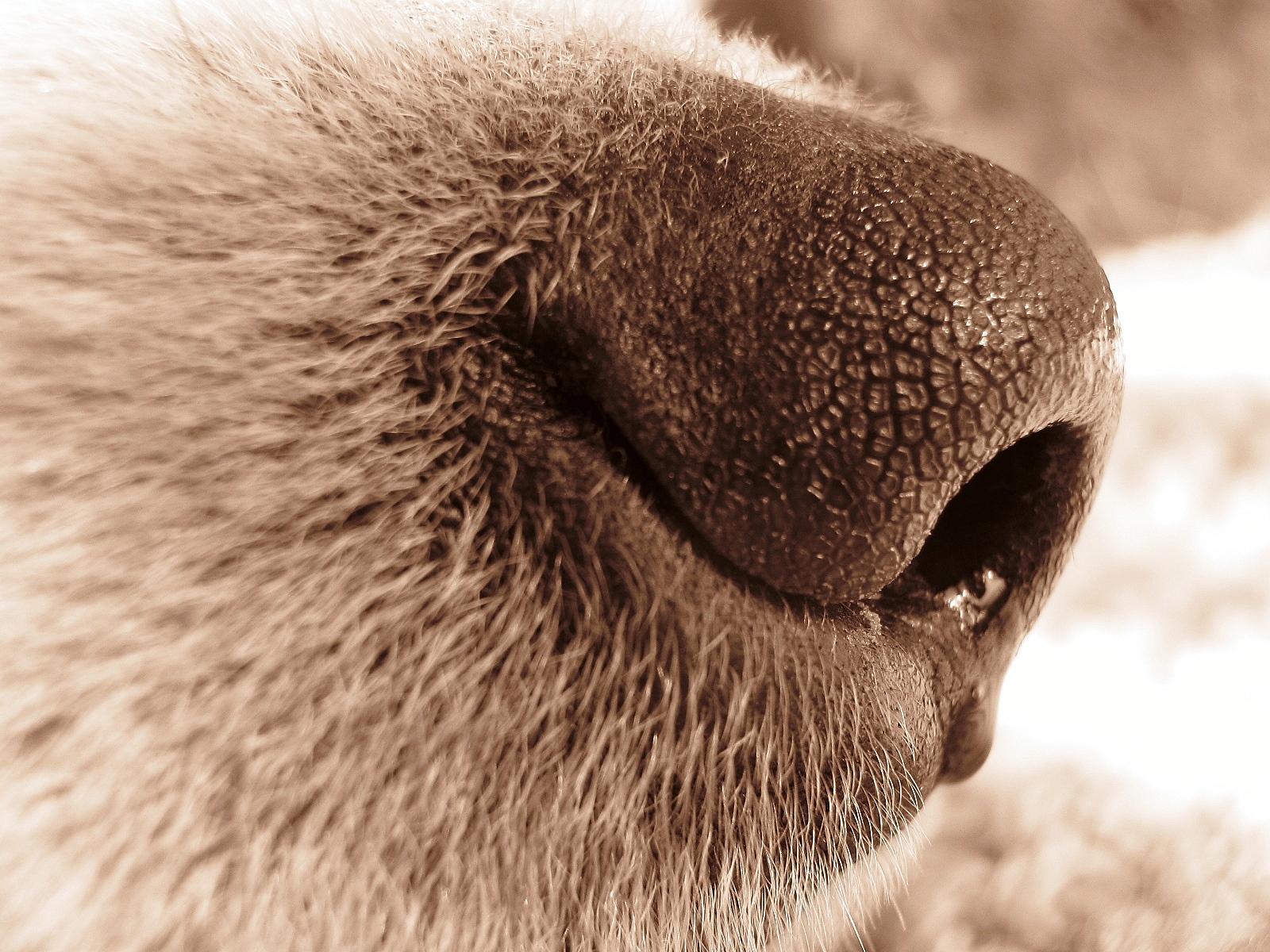
The other day I was in a supermarket with my friend while he chose a packet of teabags to keep in his office. The beautiful smells of all the different teas mingling in the air hit me as soon as we turned into the aisle. When I mentioned it, I was surprised to find that my friend couldn’t smell it. It seemed so strong to me that I found it hard to imagine how he couldn’t.

This was the first time I truly realised just how sensitive my sense of smell is.

I take great pleasure in smell. I love the relationship it has to memory and I love the richness it adds to life. If I come across a smell I like, I breathe deeply; drink in as much of it as I can. I like the smell of new books – some more than others – and I’m prone to sticking my nose between the pages and breathing in all they have to offer. I love the smell of clean washing and fresh baking; of coffee before the water’s been added and the ground just after it’s rained. These smells are loved by all sorts of people so it never really occurred to me that I might be more sensitive to them than others.

We’ve had some problems with condensation and damp recently and I’ve been quite unsettled by the associated smells. It’s become a running joke in our house because Dave can’t smell them and I, in contrast, have spent quite a lot of time ranting with my nose pressed to the curtains. I thought it was probably either me being affected psychologically because the concept of damp was upsetting to me, or him just being very unobservant. Dave, of course, has already proposed the idea that I might be unusually sensitive to smells, but I never believe him about anything until I reach the same conclusion on my own!

My friend, who’s more scientific than I am, told me that all our senses are dampened by our bodies, which put up barriers to stop us from receiving the full extent of the sensory experiences available to us. It would be too much, he says, for us to smell all there is to smell and it wouldn’t be of much practical use to us in the modern world anyway. Some people just are more sensitive than others.

And maybe I’m one of them.

When it comes to things like damp, I’d rather this wasn’t the case… but in general, it feels like a great super power to have. The pleasure I get from positive smells is so great that I will happily take the negative alongside.

Image by Elucidate

Tuesday, February 16, 2010

Nemesis

When I was at school, one of my (many) least favourite things to do was write personal statements. I don’t know why I had to do it so often but I seem to remember it being a yearly ordeal and it was always a struggle for me.

I didn’t do any sports. I wasn’t musical or artistic. I didn’t go to any after-school clubs. I didn’t have any particularly shining skills or talents. I was a fairly average girl who was slightly too scared of most things and liked to spend her free time reading and writing. And what teenager wants to admit that on paper?

Writing at that point, was a guilty pleasure for me. I have written for as long as I remember, but I used to keep it quiet. I started showing poems to my friends when I was about fifteen (mostly because poetry-writing appeals to the angst ridden teenager and I wasn’t the only one doing it) but before that, I never felt that writing was an acceptable way to spend my free time.

And so, when I was presented with a piece of paper and asked to, in my neatest handwriting, describe what I was good at and what I liked to do outside of school, I was at a loss. It always made me feel like I was somehow less of a person than the girls who played hockey or netball and practised with the orchestra three times a week. I would look at my page and think I was lacking. Sometimes, I wouldn’t even acknowledge that I liked to write.

When it came to ‘selling myself’, to pointing out the things I was good at, I was useless. I wasn’t really good at anything and I was always worried that if I implied that I thought I was, someone would laugh at me. I would say that I was a good listener – because that’s what people told me – and that I was always punctual and liked to learn new things. There was a bit of truth in all these claims, but really, I was scraping the barrel.

I’m a bit better at this kind of thing now, but I still struggle. The kind of personal statement you have to write for a job application is easier because you can gear it towards the role you’re applying for. But I think I’ll always struggle with the dreaded short bio.

A biography for a writing publication is all about finding the right fifty words to tell everyone who you are and what you do. It’s supposed to make them want to find out more about you and read more of your work. Again, it’s supposed to sell you.

I can’t make grand claims about publications I’ve appeared in and I haven’t done anything that makes me sound like I’m an exciting new writer to follow. In fact, sometimes I feel like writing a mini biography makes me look worse than if I didn’t say anything at all.

And so the short biography is my nemesis. Any small writing success I have means I have to face it, and every time I do, it reminds me of all the things I haven’t done. And every time that happens, that young girl insides me lowers her head in embarrassment and wishes she could play the piano.

Image by Luis Argerich

Sunday, February 7, 2010

Anticipation

Some weekends are hopelessly unproductive. You run repeatedly into a wall, despairingly clutching a list of things you really needed to get done. Other weekends make up for all of that. These are the weekends that you get a whole week’s work done in a day, when the words practically write themselves, leaving you on a satisfyingly twitchy high

This weekend has been the good kind.

And because I’m on a writing high, and because I need to write a post, let me tell you what I’m working towards. Let me tell you why the writing buzz is particularly important to me at the moment.

This Easter, I’m taking myself off on a writing retreat. Not the kind where you get to feel intimidated by all the work other writers are doing, or worried by the advice from visiting speakers. Not the kind where you have your meals cooked for you and share a living room with a group of friendly people who share your goals. No. None of that appeals to me. I’m going on the kind of retreat that will probably give me cabin fever: I’m going to spend two weeks entirely on my own in a studio apartment overlooking the sea.

Why?

Because I want to give myself an opportunity: an opportunity to really concentrate on my writing, to be in a situation where nothing matters but my writing. I want to be somewhere where sales people can’t ring me; where I’m not tempted to clean the windows when I reach a particularly difficult hurdle; where I feel neither the desire nor the pressure to be sociable; where I can keep whatever hours suit my writing…

And this is why I find myself uninspired by the organised kind of retreat. This is about me being alone; living alone; working alone. I have never had the financial opportunity to do this before, and it’s very unlikely that I ever will again. So now, as it presents itself, I take it eagerly.

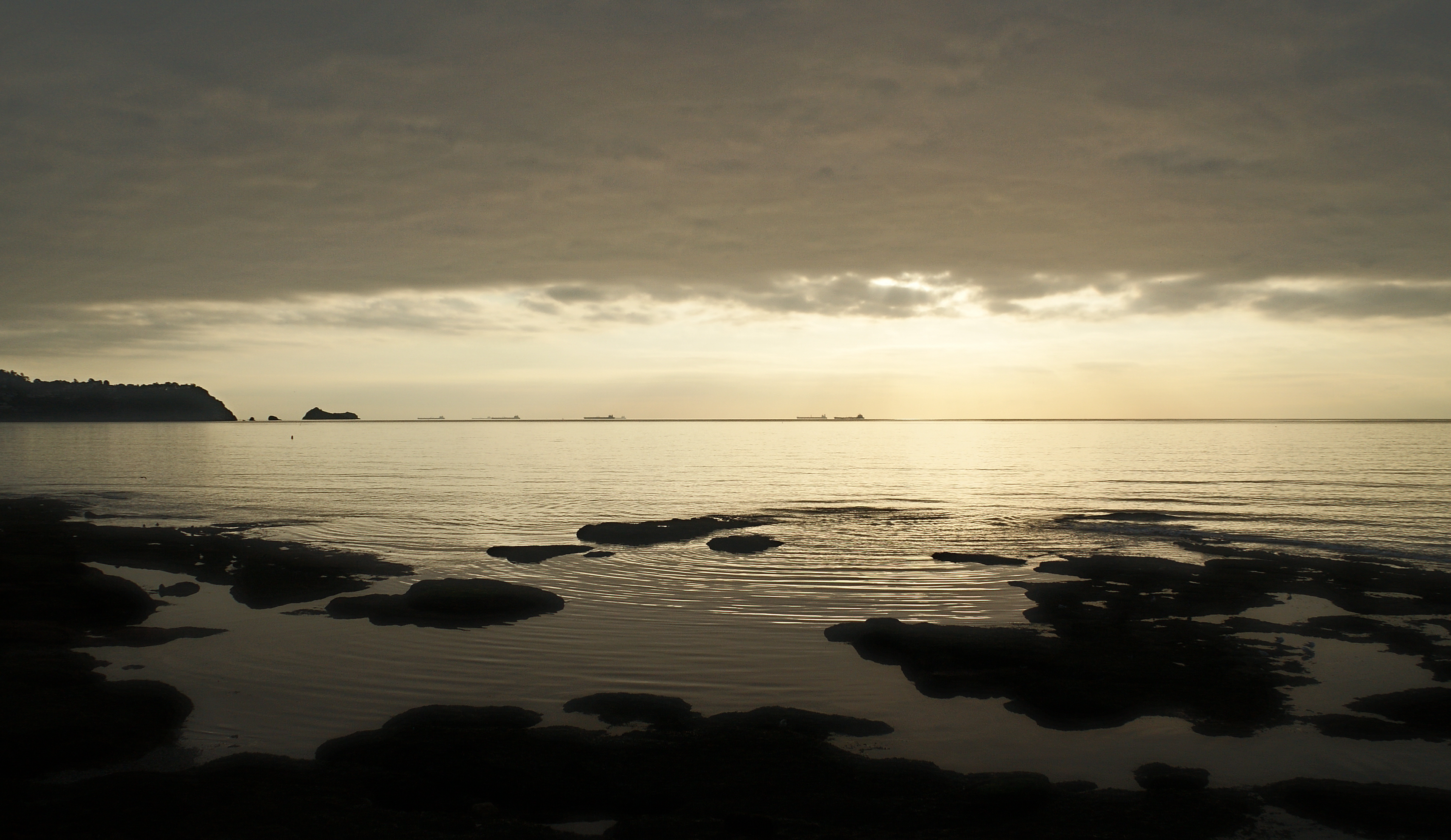
I await my retreat with fear and excitement. I have a certain amount of work I want to get done before I leave and I know what I want to have achieved by the time I come back. I’m nervous about being so isolated during those two weeks and I’m nervous about not achieving what I want to. But at the same time, I’m enormously excited about becoming entirely A Writer for a fortnight and I'm absolutely determined to finish what I’m working on. I’m looking forward to morning walks by the sea and days spent writing with only the beautiful scenery to distract me.

As the February half term approaches, I feel my retreat creeping closer and the pressure to finish what I need to is growing. This makes me both terrified and ecstatic: a combination that makes me feel thoroughly alive and thoroughly pleased to be me.

Image by Herbythyme

Monday, February 1, 2010

Choices

My Grandma, I realised the other day, has had to overcome a lot of hurdles to accept who I am.

It has been hard for her to accept that I’m never going to be a career woman; that I’m not interested in becoming a journalist or a teacher, or indeed embarking on any kind of career that would earn me a useful amount of money. She has just about accepted that working part time and spending the rest of my day writing is the way I’d like to live my life. But she doesn’t understand it. She tells me about my cousins who have both bought houses in recent years and are more financially secure than I’m ever likely to be. And every time she does, I feel very aware of that stability I don’t have; that house I can’t afford; those holidays I don’t go on.

And then I remember: I’ve chosen not to have those things.

For me, the process of affording them will not make me happy. A full-on career with all the stresses that go alongside it and the complete cut in time for myself would make me miserable. Perhaps I would be able to buy a house, but unless I could spend lots of time in it writing and cooking and doing all the things that make me happy, it’s not much use to me. For my cousins, it’s a sensible choice. As far as I gather, theirs are careers they enjoy and the houses are a bonus.

I’d love to have a house of my own. I’d love to be able to decorate my living room or decide to put shelves up in the bedroom. I’d love to know that my home is mine. But what I enjoy doing won’t pay for that right now. And what’s the point in life if you’re not enjoying it?

My Grandma understands the theory, just not the practice. And when I talk to her about it, I feel a little bit guilty for making her worry. She accepts that I’m doing what makes me happy; she just can’t for the life of her think why it does. And every time she remembers how much I’m paying in rent or the state of my bank balance at the end of the month, a little part of her panics.

But that, I remind myself as I open the front door at an hour when the sun is still reflecting on the letterbox, is no reason to become a journalist.

Image by Ian Britton